
PERFERO MATRIX CONSORTIUM
ORBITAL COMPUTE and ORBITAL COMPUTE-AS-A-SERVICE
Separating what is truly service-valuable from what is technically impossible.
The use of the phrase “orbital data centers” is a misnomer. It is an example of humans’ tendency to way to over-simplify and under-appreciate solving problems that customers have for service and solutions, over infrastructure and things! The phrase connotes an image that we are literally “lifting and shifting” a massive box and its contents that is millions of square meters of infrastructure into orbit. But that’s not a buyer’s need, addressed.
Network computing and communications within, from and to Space offers benefits to both companies on Earthly terra firma and those with infrastructure in space. Let’s call it Orbital Compute. And, capital is moving into orbital compute and networking, right now. The operators and investors who understand the real market needs for services, technical requirements, and the commercial, economic landscape will capture the opportunity. Those who do not will make expensive mistakes.

THE REFRAME
Why “data center” is the wrong word. Taking it a little further…
The market borrowed a terrestrial word and pointed it at space. “Data center” anchors everyone, founders, investors, and the press alike, on a hyperscale facility of 100 to 500 megawatts, and then imagines lifting it whole into orbit. That mental model, the lift and shift, is precisely what the physics does not yet support at scale and no single spacecraft is ever likely to. It is why so many first-generation business plans will quietly break and fade away.
Orbital compute-as-a-service (OCaaS) starts from the opposite end: the workload and the service composition to address it. What computation is worth running in orbit, what can it be sold as, and what does it actually cost to deliver? Framed that way, a focused processing payload doing on-orbit data reduction is not a failed data center. It is a viable service today. The category is not a building in space. It is compute, delivered as a service, from orbit.
The Opportunity:
The next major infrastructure cycle isn’t on Earth.
Compute, storage, and processing are moving off the ground and into orbit, delivered not as a facility you build and own but as a network service you consume. Terrestrial data centers face structural limits no amount of engineering will fully resolve any time soon. AI hyperscale now demands 500 megawatts and more while grid capacity, permits, and utility costs throttle buildout. Billions of gallons of cooling water are consumed each year against increasingly constrained supply. Hyperscale sites need hundreds of zoned acres and face rising community opposition. NEPA and EPA permitting add years to timelines.
In orbit, the constraints invert. Continuous solar exposure reduces grid dependency, radiative cooling requires no water, orbital planes need no municipal zoning (though they do need collision avoidance), and Low Earth Orbit delivers global, low-latency reach. SpaceX, Blue Origin, and Kepler are already moving. But, the space domain also introduces hard problems that terrestrial operators never face. The critical question is not whether orbital compute will be delivered as a service. It will. The questions are what types, with what feature/functionality, when, by whom, and how investors and supply-chain providers identify, evaluate, and participate in that opportunity.
The Problem
Investment theses are being built on incomplete assumptions.
Every investor and operating company entering this market faces the same structural challenges: identifying the differentiated services to be offered, the space-unique engineering issues are numerous, and the expertise to evaluate them does not sit in any one place. Terrestrial data-center experts do not model orbital mechanics, radiation environments, or launch economics. Space engineers do not model co-location economics, standards, power-density tradeoffs, or enterprise SLAs. Investors are left triangulating between advisors who each see only part of the picture.
The result is predictable. Business plans misstate power economics, under-model operating expense, ignore regulatory exposure, and benchmark storage density against terrestrial rather than orbital realities.
The Critical Technical & Engineering Issues:

Four questions decide whether orbital compute can be delivered as a service.
The full brief details nine. Four gate everything.
Power at Scale
The ISS peaks near 150 kW. Hyperscale AI needs 100 to 500-plus MW. Power is the gating variable, and the physical architecture has to be built around the power source, not the other way around. Most current models overstate efficiency against terrestrial benchmarks.
Thermal Cooling
There is no water in space and no scalable way yet to reject the heat of meaningful compute. Radiative cooling implies enormous surface area that degrades under micrometeoroid and debris exposure. This is the most intractable unsolved engineering problem at commercial scale.
Power Source
No scalable orbital power system exists for meaningful compute loads today. Solar at hyperscale implies arrays measured in hundreds of football fields. Nuclear fission has flown only for Russia and China, the US is limited to RTGs, and fusion is lab-only. Wrong power assumptions invalidate entire pro formas.
Launch Cost, Mass & Cadence
Launch runs roughly 3,000 to 4,000 dollars per kilogram today. Commercial viability needs something closer to 150 to 300, a 10 to 15 times reduction not yet achieved at scale. Any plan that does not model launch-cost sensitivity is incomplete.
How Perfero Matrix Consortium Helps
Orbital compute needs four kinds of expertise at once.
Perfero Matrix Consortium was built because orbital compute requires product and commercial, integrated network computing, terrestrial and orbital engineering, and regulatory/legal expertise. We are the rare team that spans all four, and we work as operators and practitioners alongside our clients to answer the questions that determine returns and competitive position.
For Investors & Financial Sponsors
Technical and commercial diligence — stress-tests the assumptions most advisors can’t evaluate
Market sizing and timing mapped to enabling technology readiness (now / 3 to 5 years/ 7-plus)
Risk identification across technical, regulatory, and competitive dimensions
Business-plan and financial-model review that surfaces the structural flaws in first-generation models
For Operating Companies
Product-fit assessment: can your technology translate to orbit, and at what cost?
Space-qualification roadmap and supply-chain gap analysis
Business model development and go-to-market strategy for the emerging orbital compute supply chain
Market-entry strategy, ecosystem mapping, and partner identification
THE TEAM
People who have been inside these problems.
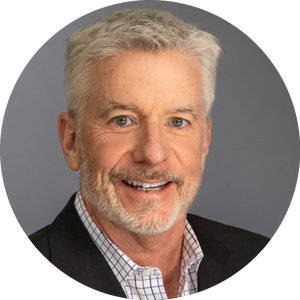
Jon Kirchner — President & CEO, Perfero Advisory LLC
~30 years across space-based infrastructure, satellite constellations, data management, IoT, and robotics in global organizations. A C-level executive and rare advisor who has operated at the intersection of business operations, engineering, strategy, and commercial execution in the space industry.
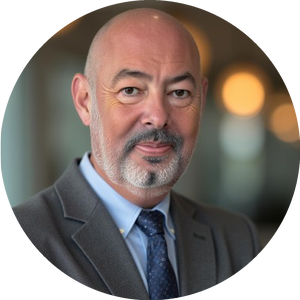
John Callison — Founder, O3C
20 years across global data-center infrastructure, power systems, thermal management, supply-chain architecture, and operational standards. Brings the terrestrial-to-orbital translation layer that exposes flawed assumptions, validates feasibility, and grounds architectures in real-world power, cooling, and operational constraints.
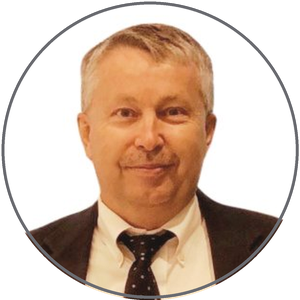
David Beckett — Founder, Frontier Innovations
~35 years of engineering innovation, including DARPA and Ball Aerospace, in what is technically feasible and commercially viable in the orbital domain — from spacecraft design to operational infrastructure. Provides the engineering reality check that separates credible ODC business cases from aspirational ones.

Dennis Gatens — Founder, LEOcloud
~35 years delivering complex communications and cloud solutions and managed services across terrestrial and commercial space markets. As Founder of LEOcloud, acquired by Voyager Technologies, he brought to market the first space-hardened, multi-cloud IaaS and commissioned the first operational cloud region in space aboard the ISS.

The window is open now.
Orbital compute carries a layer of technical and regulatory complexity that cloud infrastructure never did. Getting it right takes a team that has been inside these problems — not one that has read about them.
Colleen Lonsberry — Founder, Kate Ryan & Company
Brings structured market positioning, audience development, and content strategy, translating the Consortium’s technical depth into compelling narratives for investor and executive audiences.